
Application Guide
Sodium Hypochlorite Transfer Pumps
The oxidiser that off-gasses inside your pump.
Sodium hypochlorite — bleach — is the standard disinfectant in water treatment and a common process chemical. It decomposes continuously, releasing gas that accumulates inside pumps, and it aggressively oxidises unsuitable metals and elastomers. Non-metallic construction with gas-aware selection is the correct approach.
The pumping challenges
- Continuous off-gassing causes vapour-lock in closed systems
- Strong oxidiser — attacks many metals and elastomers
- Decomposition accelerates with heat and light
- Salt deposits form at seal faces and dry surfaces
Material options
PP and PVDF both resist hypochlorite well
EPDM or FFKM elastomers
Ceramic/PTFE seal and bearing surfaces
Technical considerations
- Suction-flooded installation strongly preferred — avoid suction lift on gassing liquids
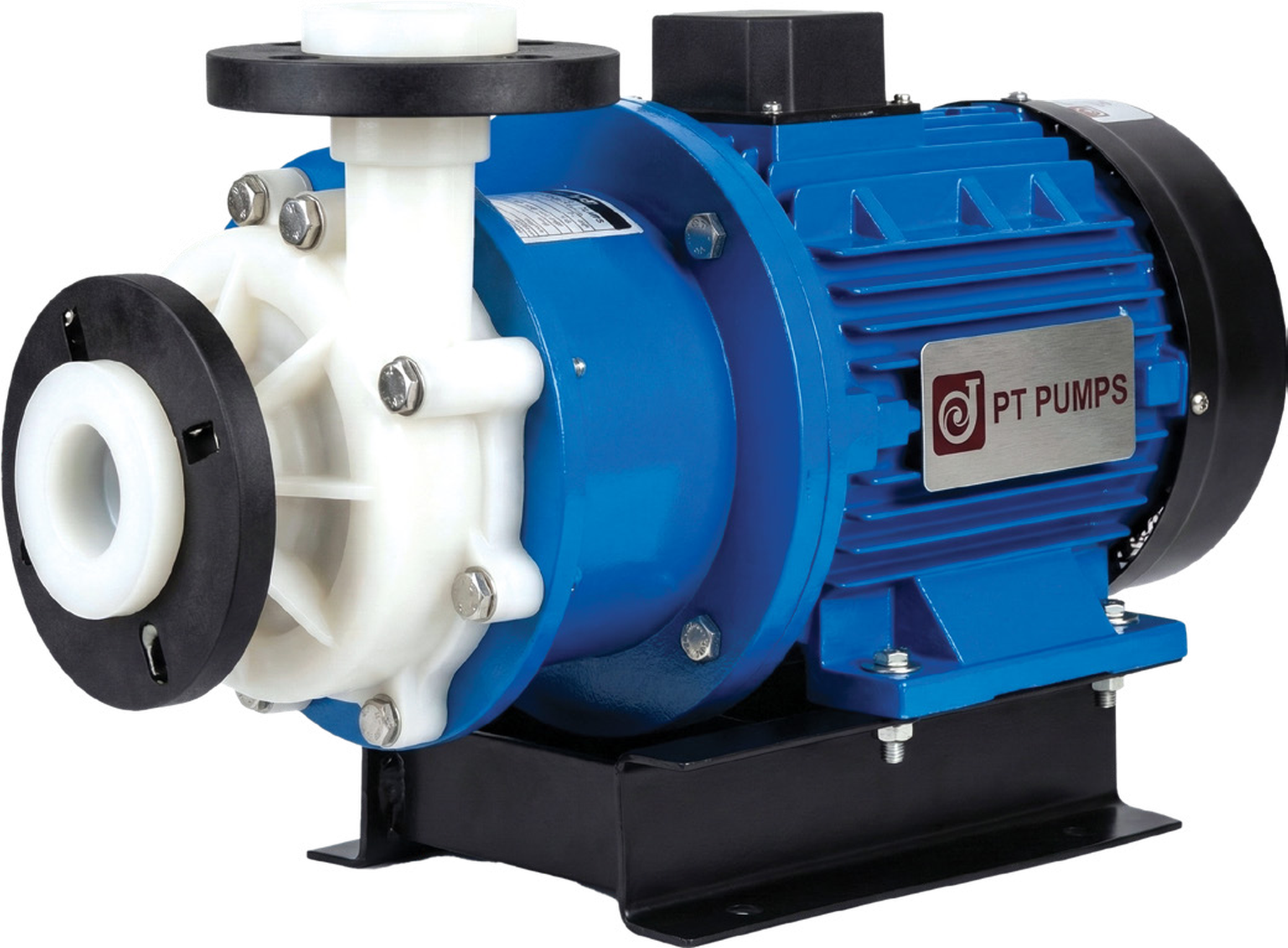
- Magnetic drive removes the seal-face salt-deposit failure mode
- Vent arrangements reviewed at selection
- Specify actual concentration — trade strength varies 4–15%
Honest limits: no pump material is universally compatible with every concentration and temperature of a chemical. Final selection is confirmed against your exact duty — that's why we ask before we quote.
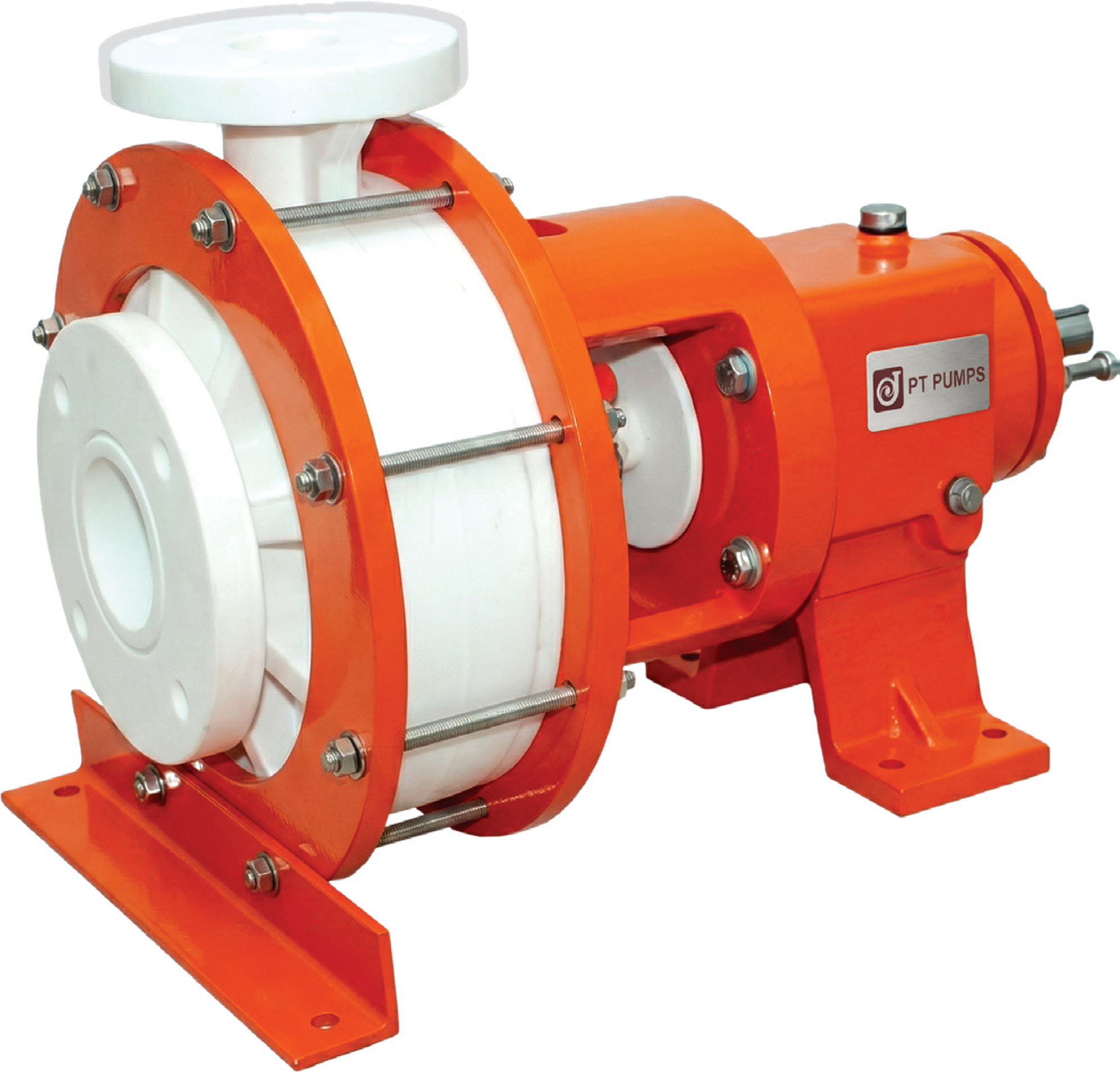
Suitable PT Pumps
Pumps for this duty
FAQs
Common questions on this duty
Hypochlorite decomposes and releases gas continuously. In a suction-lift or closed arrangement the gas accumulates and vapour-locks the pump. A flooded suction and a magnetic drive pump designed for gassing liquids solves it.
Enquire
Get a pump selected for this duty
Fill in the duty point — the form is pre-tagged for this application. An applications engineer responds with a confirmed selection and budgetary quotation.