
Application Guide
Hydrochloric Acid (HCl) Transfer Pumps
The acid that eats stainless steel — pumped safely in PP and PVDF.
Hydrochloric acid is one of the most corrosive liquids handled in Indian process plants — used in steel pickling, chemical synthesis, water treatment and pharma. It destroys SS 316 rapidly at almost any concentration, which is why the correct HCl pump is almost always non-metallic.
The pumping challenges
- Attacks SS 316 and most stainless alloys at nearly all concentrations
- Fuming grades create hazardous vapour on any leak
- Concentrations from 5% to 36% behave very differently
- Seal leakage is a direct operator-safety risk
Material options
PP (up to 70 °C, economical for dilute and moderate grades)
PVDF (elevated temperature, fuming grades)
PTFE seal faces and FFKM/EPDM elastomers as required
Technical considerations
- Specific gravity up to ~1.18 at 36% — motor sizing must account for it
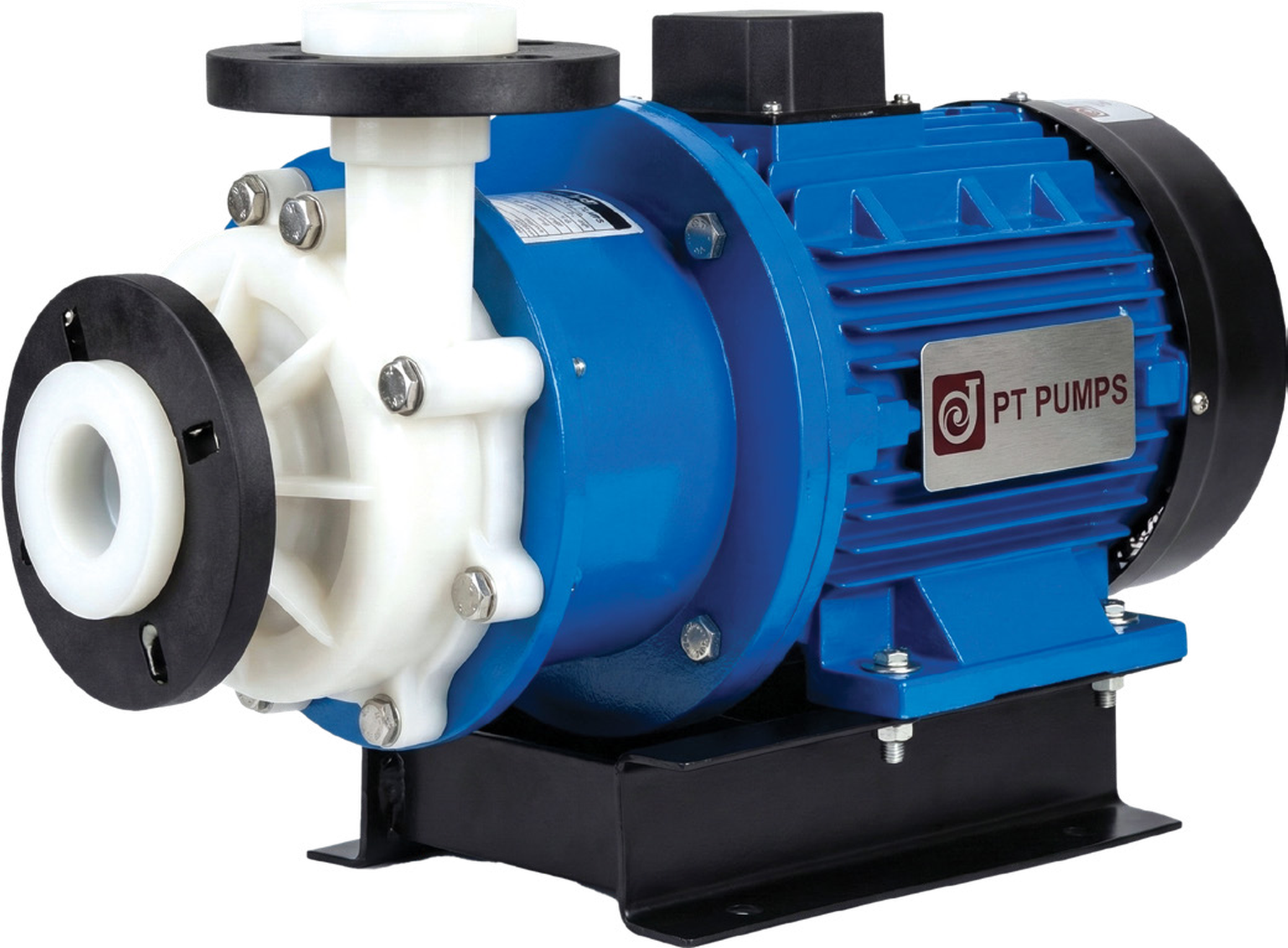
- For fuming acid, seal-less magnetic drive removes the vapour-leak path entirely
- Suction piping should be PP/PVDF lined or solid polymer
- Always state the exact concentration — 10% and 36% HCl are different pumps
Honest limits: no pump material is universally compatible with every concentration and temperature of a chemical. Final selection is confirmed against your exact duty — that's why we ask before we quote.
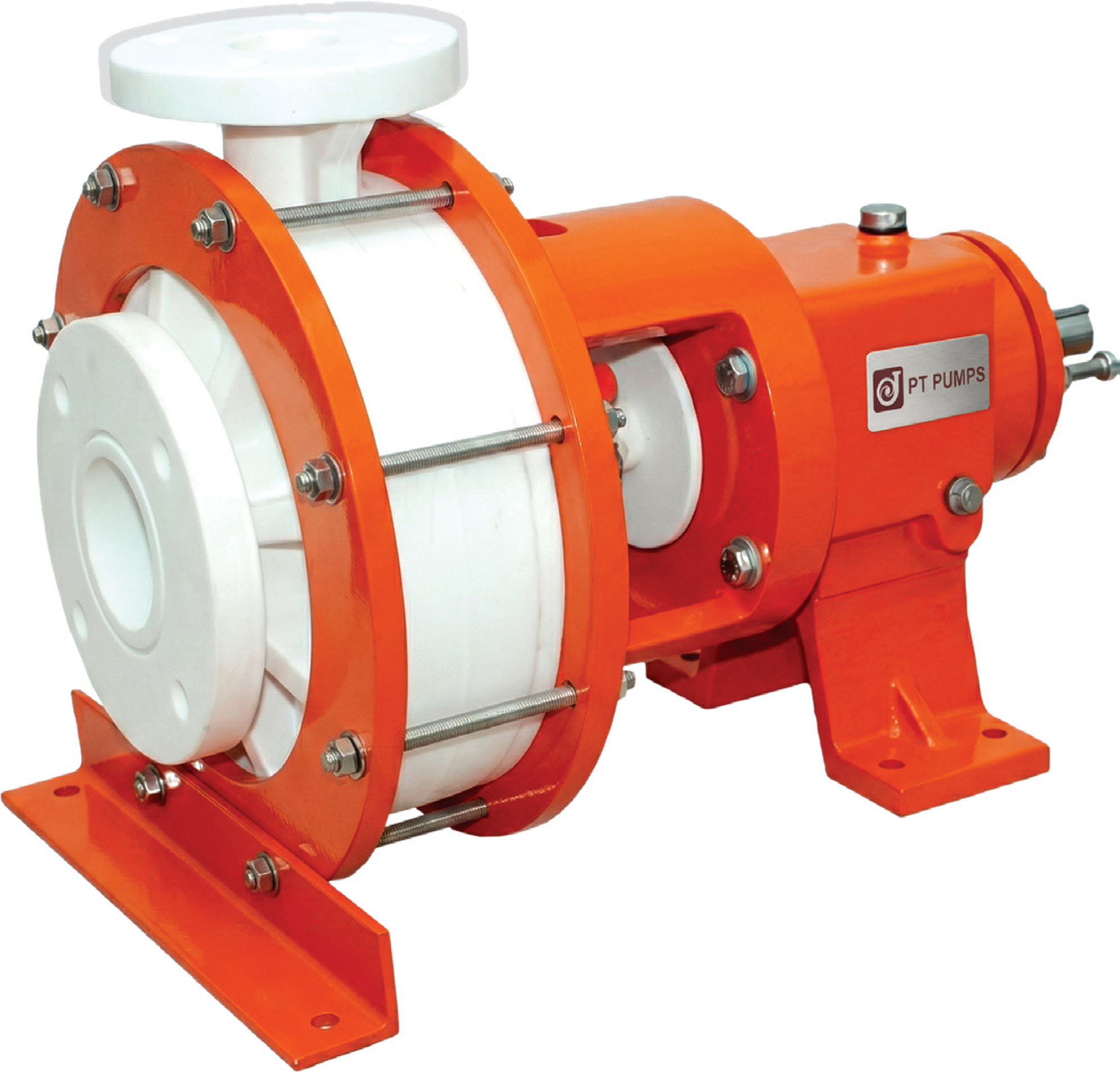
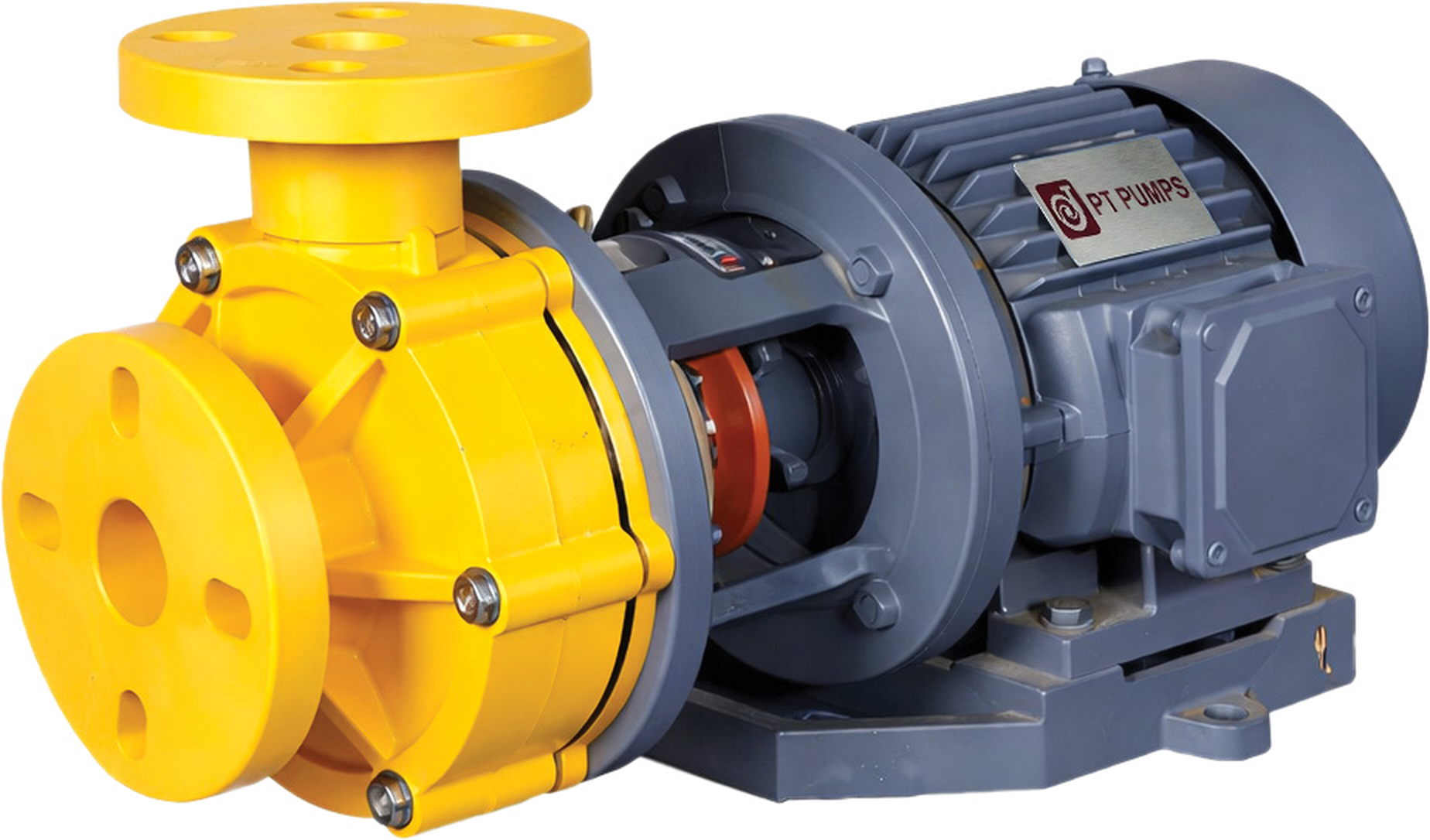
Suitable PT Pumps
Pumps for this duty
FAQs
Common questions on this duty
No — hydrochloric acid attacks SS 316 aggressively at almost all concentrations. We have replaced brand-new stainless impellers perforated in months on HCl duty. The correct construction is non-metallic: PP below 70 °C, PVDF above it.
Enquire
Get a pump selected for this duty
Fill in the duty point — the form is pre-tagged for this application. An applications engineer responds with a confirmed selection and budgetary quotation.