
Application Guide
Caustic Soda (NaOH) Transfer Pumps
Alkaline duty that crystallises, freezes and burns.
Caustic soda is everywhere — pulp and paper, textiles, soaps, water treatment, alumina. It is chemically gentle on many materials but physically treacherous: it crystallises in seal faces, approaches its freezing point in winter lines at 50% concentration, and causes severe burns on any leak.
The pumping challenges
- Crystallisation at seal faces causes premature seal failure
- 50% caustic freezes around 12 °C — cold-weather line blockages
- High SG (1.5+ at 50%) increases power demand
- Severe chemical burns from even small leaks
Material options
PP handles caustic across most concentrations and temperatures
SS 316 metallic construction for higher temperatures and duties
EPDM elastomers — caustic degrades incompatible rubbers
Technical considerations
- Seal selection must anticipate crystallisation — discuss flush options for concentrated duty
- Motor sized on actual SG, not water
- Trace-heating or drainage planning for outdoor winter lines at 50%
- PP is often the economical, corrosion-proof answer below 70 °C
Honest limits: no pump material is universally compatible with every concentration and temperature of a chemical. Final selection is confirmed against your exact duty — that's why we ask before we quote.
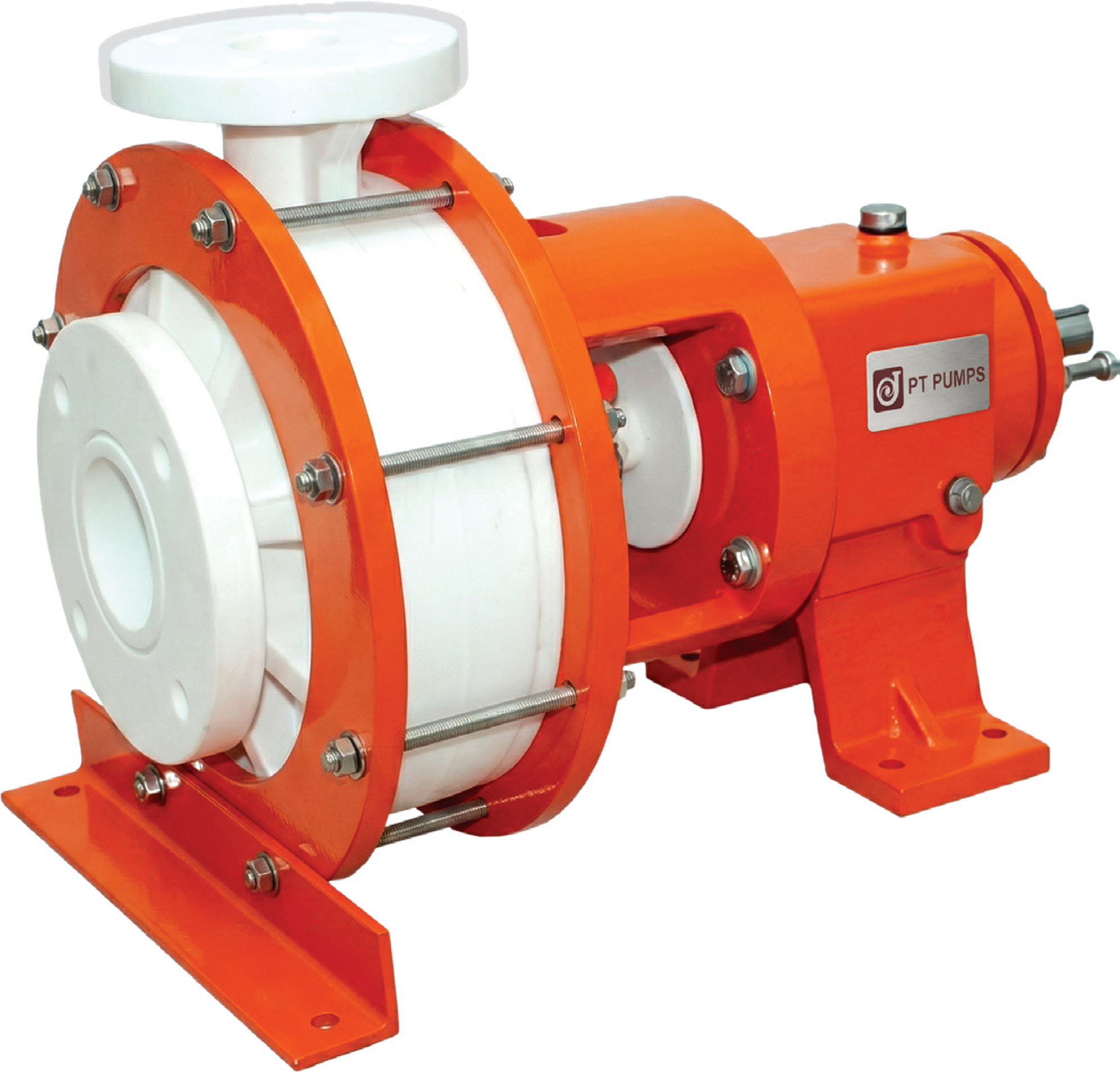
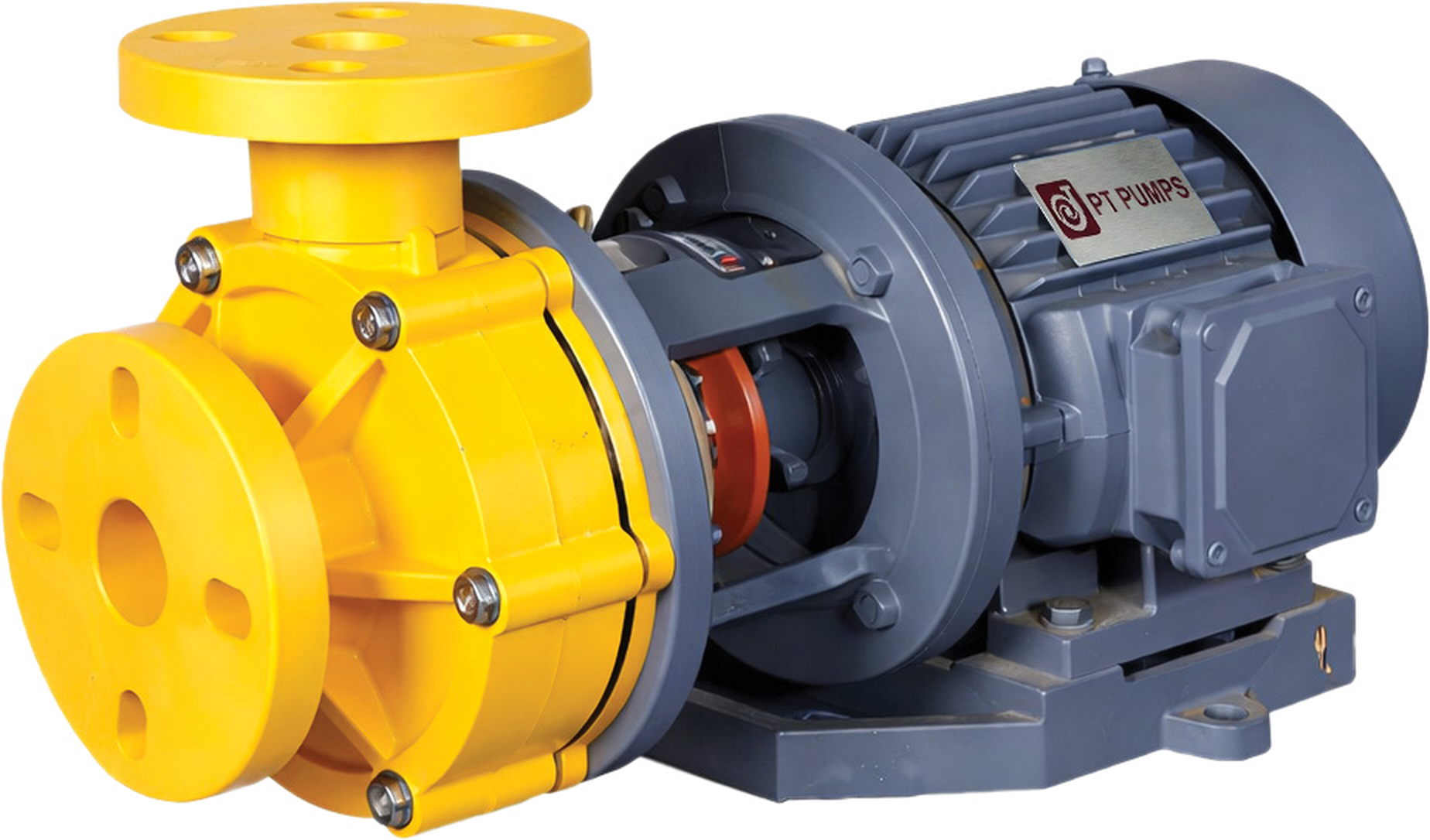
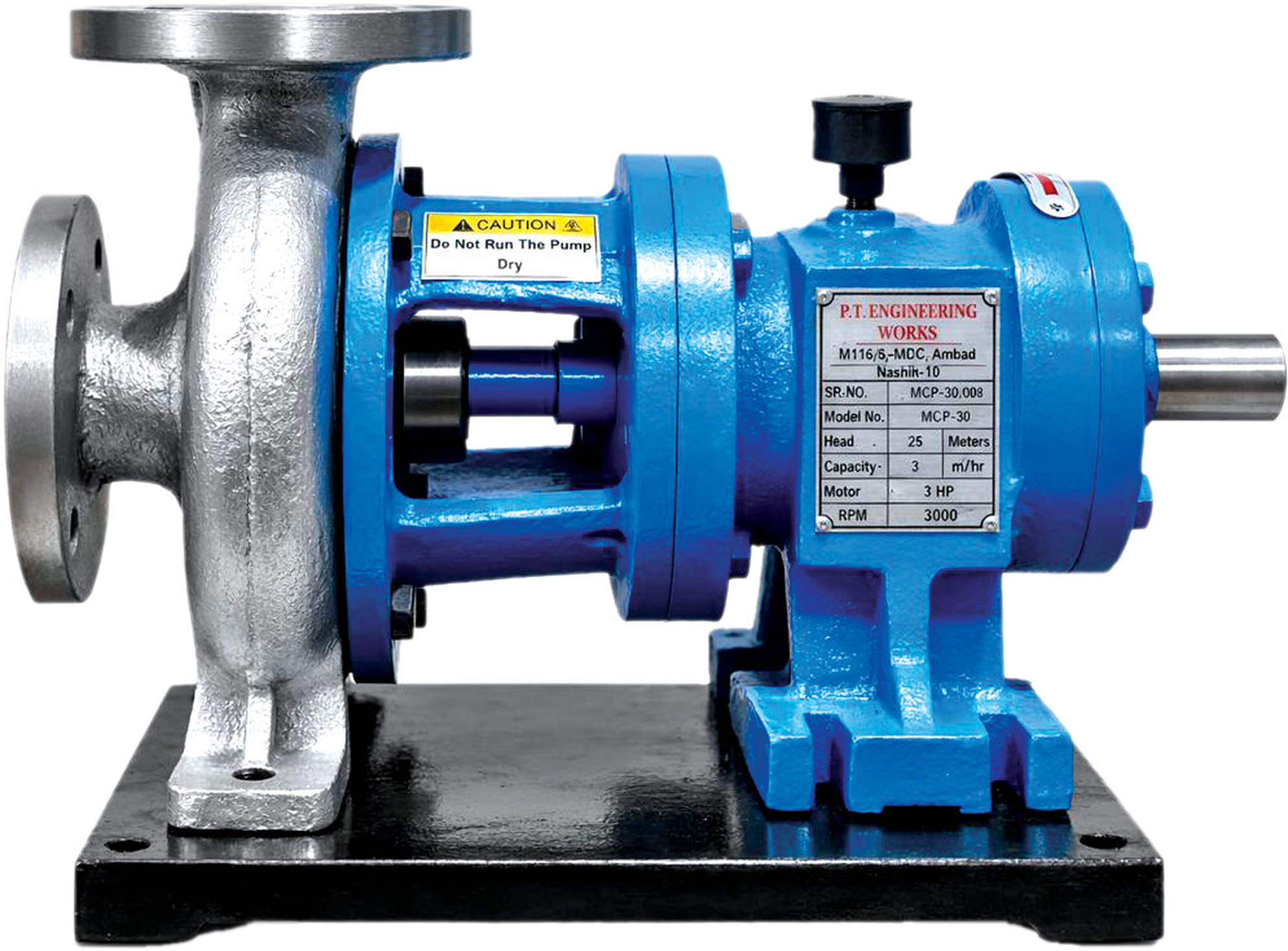
Suitable PT Pumps
Pumps for this duty
FAQs
Common questions on this duty
Both work — PP up to 70 °C is the corrosion-proof, economical choice; SS 316 suits higher temperatures. The deciding factors are usually temperature, duty size and whether crystallisation at seals needs special arrangements.
Enquire
Get a pump selected for this duty
Fill in the duty point — the form is pre-tagged for this application. An applications engineer responds with a confirmed selection and budgetary quotation.